
Short answer: A DEF fluid quality test in a workshop should begin with the decision you need to make, not with the word quality in a product title. A GOV.UK report identifies ISO 22241-1 as the specification for AdBlue and states a 32.5% urea content. Defurea's product page confirms a handheld refractometer format for fluid concentration checks, but it does not claim a complete ISO 22241 test, purity analysis, contamination detection or traceable calibration. Use the product as a possible screening tool only after the manufacturer confirms the relevant specifications and the workshop procedure accepts that method.
Define what quality means for the job
In this context, quality may mean a quick concentration screen, a supplier intake check, an investigation of suspected contamination or a documented release decision. Those tasks are not interchangeable. A GOV.UK report identifies ISO 22241-1 as the specification for AdBlue and states a 32.5% urea content, so the required evidence still depends on the decision and the procedure behind it.
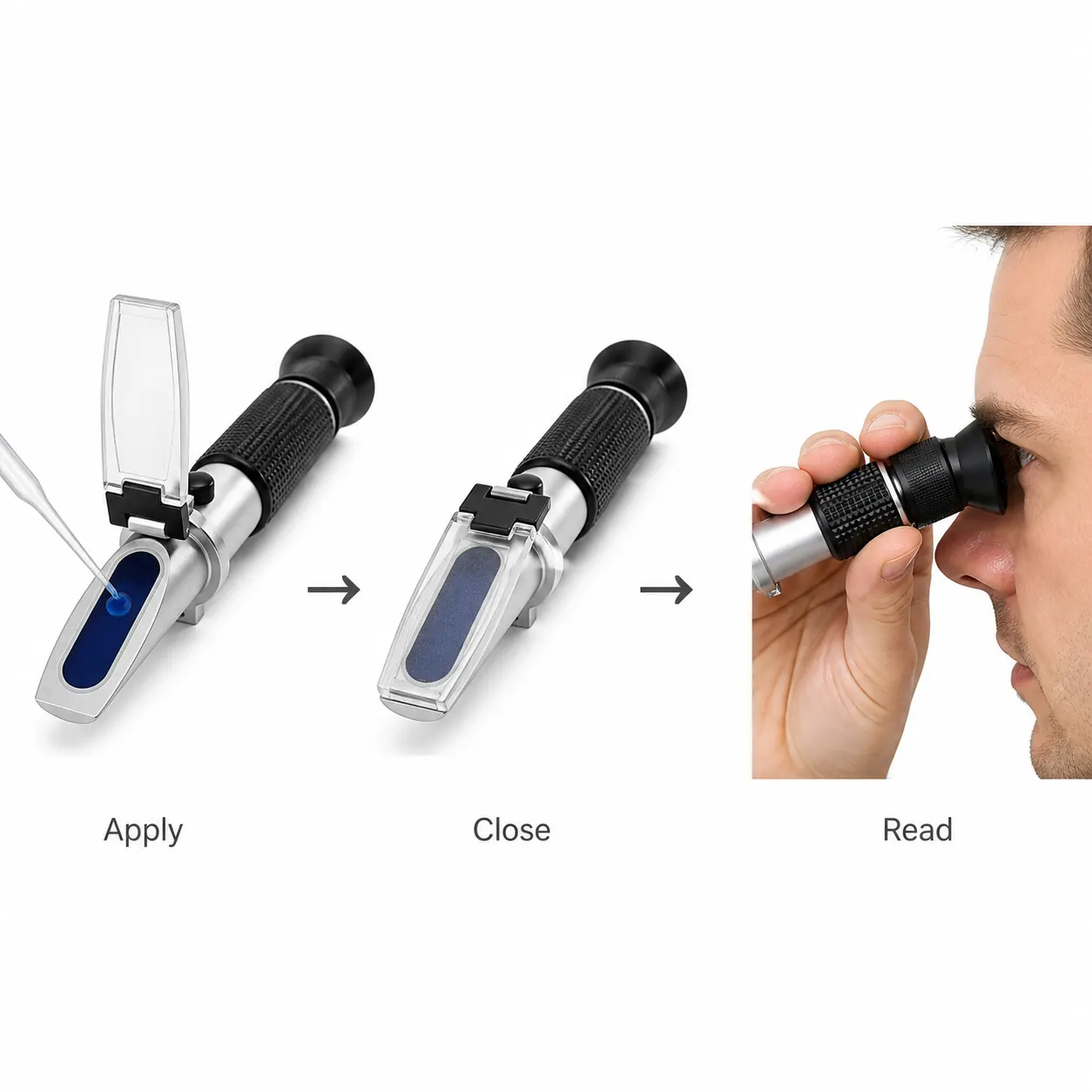
The product page does not state that the DEF urea refractometer measures every ISO characteristic. It only describes a handheld refractometer format for fluid concentration checks. That wording is useful and restrained; the article should keep it that way.
| Workshop question | What can be said from the current evidence |
|---|---|
| Can the tool be considered a concentration-check product? | Yes, the product page describes it as a handheld refractometer for fluid concentration checks. |
| Can it prove purity or contamination status? | No published evidence on the product page. |
| Can it replace an approved ISO test method? | Manufacturer does not specify that capability. |
What is confirmed and what is missing
The page identifies the item as DEF urea refractometer and gives a compact specialist positioning for automotive maintenance. Those facts support a shortlist when a handheld concentration check is genuinely wanted.
Manufacturer does not specify the measuring range, scale units, accuracy, repeatability, calibration material, temperature correction, sample volume, cleaning method, storage limits, contamination sensitivity or certificate. It also does not publish vehicle coverage, fluid purity verification or a safety guarantee. These are buying questions, not details to infer from the product name.
Build the workshop decision path
A short written decision path can prevent a low-cost screening instrument from being over-promoted as a quality system. Keep the operator's authority and the evidence threshold visible in the record.
- Write the decision in one sentence, such as screening a received fluid or investigating an unexpected vehicle warning.
- List the quality characteristics and acceptance limits required by the workshop, fleet or fluid supplier procedure.
- Ask the manufacturer which published specifications and test method apply to the refractometer, including calibration and temperature conditions.
- Use an approved laboratory or reference method when the result controls release, rejection, warranty or a safety-related repair.
Buying limits for a high-risk claim
Do not describe the product as an ISO-certified tester, a purity analyser or a contamination detector unless the manufacturer provides that exact evidence. ISO 22241 is a standard reference, not a certificate for an unspecified retail instrument.
The OCI safety data sheet is useful for restrained handling language around AUS 32, but it does not validate the Defurea instrument. Keep chemical handling, measurement performance and compliance claims in separate evidence lines.
Related guides and product details
For workshop screening, this may be a reasonable product type to investigate. For formal DEF quality decisions, buy only after the manufacturer supplies the missing method and performance evidence. Read AdBlue Concentration Tester 32.5: UK Buyer Checks for related guidance. Read AdBlue Refractometer UK: What the Listing Does Not Prove for related guidance. Review the documented specification on the DEF urea refractometer product page before ordering.
Sources and safety context
- Supports the product type, concentration-check wording and automotive maintenance positioning. DEF urea refractometer product page.
- Supports the GOV.UK description of AdBlue, ISO 22241-1 and 32.5% urea content. Bus retrofit performance report.
- Provides an additional UK technical reference for the AUS 32 and ISO 22241 context. Environment Agency technical submission referencing AUS 32.
- Supports cautious handling references for AUS 32 without extending them to product performance. AUS 32 safety data sheet.